
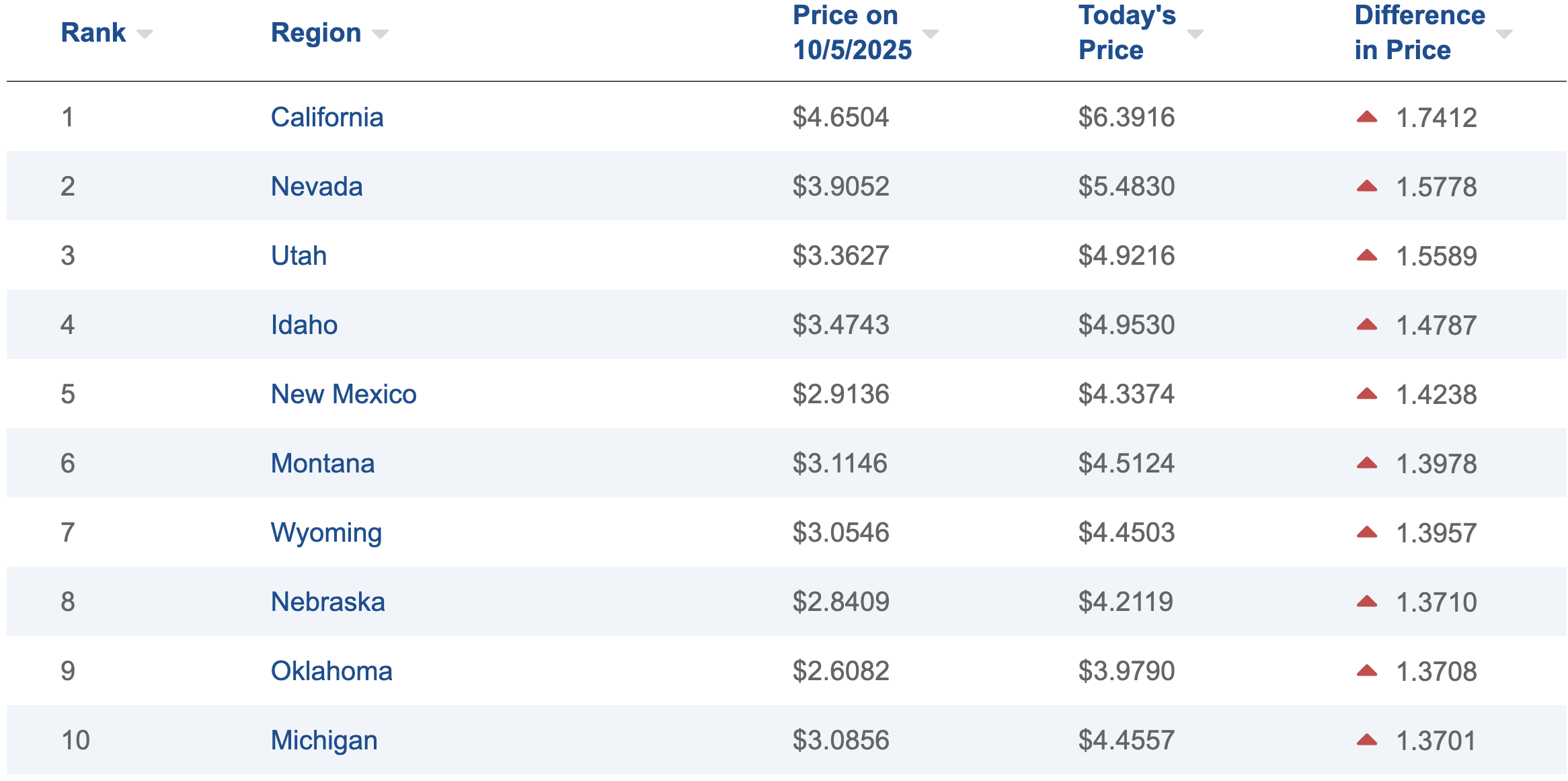
Diesel is over $6 a gallon across most of Colorado, with a few stations just squeaking in at $5.99. Meanwhile, Colorado’s average gallon of unleaded is $4.13. Below are the 10 states with the biggest year-over-year jumps in unleaded prices, according to AAA. Nine of the ten are up more than 40%, and all ten are up at least 37%.
As a small business owner, you feel that. It got me thinking about how quickly price shocks can hit, and how fast they eat into margin if you don’t address them.
Short-term price shocks: Gas is a perfect example, but you don’t have to look far to find others (US hits Canadian goods with 50% tariffs after trade talks fail). In both cases, you should account for key input costs and may need to pass at least part of the increase on to customers so your business stays profitable.
Two transparent ways to reduce risk
Shorten your quote window: If your estimates are usually good for 30 days, cut that to 7 or 14 days, depending on how fast your input costs are moving. Make the change clear on the estimate and explain why (sample language below). For example, a window installer sourcing aluminum from Canada might move to 7 days. A stair-railing company might move to 21 days, since it doesn’t expect transportation costs to change much.
Sample disclaimer: “Please note the updated deadline on this estimate. We’ve shortened it due to recent swings in our costs. At [Your Company], we strive to give customers transparency and consistency, and we appreciate your understanding.”
Add a transparent surcharge: This works best when a usage-based input, like fuel or water, spikes. Add a surcharge line to the estimate and the matching invoice to cover the extra cost. A few ways businesses can approach it:
Services Company: a fuel surcharge based on miles traveled (works best when most customers are clustered nearby)
Hot Tub Cleaning Company: a per-visit fee to cover higher travel costs
Snow Plow Company: a per-visit fee once a season contract passes 40 visits
Denver Water: a drought surcharge on top of its standard rate per 1,000 gallons
Working together we can establish which approach is right for you? First, identify the input costs that could spike and note whether each is a materials cost or a usage-driven cost. Second, pick the most transparent way to pass the increase on to customers and protect your margin.
Want to talk it through? Reach out at Paige@minerscreekadvisors.com.
